Archives 2022

Classification of Bricks Based on Shape

Classification of Bricks Based on Shape

Based on shape bricks are of the following kinds:

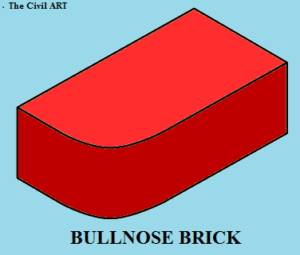
1.   Bullnose Brick: These bricks are moulded into round angles. They are used for rounded quoin.

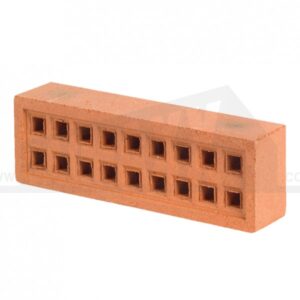
2.   Airbricks: These bricks contain holes to circulate air. They are used on suspended floors and cavity walls.

3.   Channel Bricks: They are moulded into the shape of a gutter or channel. They are used in drains. 

4.   Coping Bricks: They can be half-round, chamfered, Saddleback, angled varied according to the thickness of the wall.

5.   Cow Nose Bricks: Bricks have double bullnose known as Cow Nose Bricks.

6.   Capping Bricks: These bricks are used to cap the tops of parapets or freestanding walls. 

7.   Brick Veneers: These bricks are thin and used for cladding.

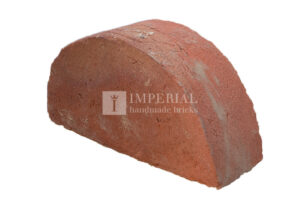
8.   Curved Sector Bricks: These are curved. They are used in arcs, pavements, etc.

9.   Hollow Bricks: These bricks are around one-third of the weight of normal bricks. They are also called cellular or cavity bricks. Their thickness is from 20-25mm. These bricks pave the way for quicker construction as they can be laid quickly compared to normal bricks. They are used in partitioning. 

10.                  Paving Bricks: These bricks contain a good amount of iron. Iron vitrifies bricks at low temperatures. They are used in garden park floors, and pavements. These bricks withstand the abrasive action of traffic thus making the floor less slippery. 

11.                  Perforated Bricks: These bricks contain cylindrical holes. They are very light in weight. Their preparation method is also easy. They consume less clay than the other bricks. They can be of different shapes like round, square, or rectangular. They are used in the construction of the panels for lightweight, structures, and multistoried frame structures. 

12.                  Purpose Made Bricks: For specific purposes, these bricks are made. Splay and can’t bricks are made for doors and window jambs. Engineering bricks are made for civil engineering constructions such as sewers, manholes, and retaining walls. Fire bricks are made for chimneys and fireworks. Ornamental bricks are made to use for cornices and corbels. Arch bricks are used in arcs.

Classification of Bricks Based on Their Using

Classification of Bricks Based on Their Using

There are many uses of bricks Based on the purpose of their use bricks are of the following kinds:

1.   Common Bricks: These bricks are the most common bricks used. They don’t have any special features or requirements. They have low resistance, low quality, and low compressive strength. They are usually used on the interior walls.

2.   Engineering Bricks: These bricks are known for many reasons. They have high compressive strength and low absorption capacity. They are very strong and dense. They have the good load-bearing capacity, damp proof, and chemical resistance properties. They have a uniform red colour. They are classified as Class A, Class B, and Class C. Class A is the strongest but Class B is the most used. They are used for mainly civil engineering works like sewers, manholes, groundworks, retaining walls, damp proof courses, etc.

Classification of Bricks Based on Shape

Classification of Bricks Based on Weather-resisting Capability

Classification of Bricks Based on Weather-resisting Capability

Based on weather-resisting capability bricks are of the following kinds:

1.   Severe Weather Grade: These types of bricks are used in countries which are covered in snow most of the time of year. These bricks are resistant to any kind of freeze-thaw actions.

2.   Moderate Weather Grade: These types of bricks are used in tropical countries. They can withstand any high temperature. 

3.   No Weather Grade: These bricks do not have any weather resisting capabilities and are used on the inside walls.

Classification of Bricks Based on Using Location

Classification of Bricks Based on Using Location

Based on using location bricks are of the following kinds:

1.   Facing Brick: The façade material of any building is known as facing brick. Facings bricks are standard in size, are stronger than other bricks and also have better durability. The colour is red or brown shades to provide a more aesthetic look to the building. There are many types of facing bricks which use different techniques and technology. Facing bricks should be weather resistant as they are most generally used on the exterior wall of buildings. 

2.   Backing Brick: These types of brick don’t have any special features. They are just used behind the facing bricks to provide support.

Classification of Bricks Based on Raw Materials

Classification of Bricks Based on Raw Materials

Based on raw materials bricks are of the following kinds:

1.   Burnt Clay Brick: It is obtained by pressing the clay in moulds and fried and dried in kilns. It is the most used brick. It requires plastering when used in construction works. 

2.   Fly ash clay Brick: It is manufactured when flying ash and clay are moulded at 1000 degrees Celsius. It contains a high volume of calcium oxide in fly ash. That is why usually described as self-cementing. It usually expands when coming into contact with moisture. It is less porous than clay bricks. It proved a smooth surface so it doesn’t need plastering.

3.   Concrete Brick: It is made of concrete. It is the least used brick. It has low compression strength and is of low quality. These bricks are used above and below the damp proof course. These bricks are used can be used for facades, fences and internal brickworks because of their sound reductions and heat resistance qualities. It is also called mortar brick. It can be of different colours if the pigment is added during manufacturing. It should not be used below ground. 

4.   Sand-lime Brick: Sand, fly ash and lime are mixed and moulded under pressure. During wet mixing, a chemical reaction takes place to bond the mixtures. Then they are placed in the moulds. The colour is greyish as it offers something of an aesthetic view. It offers a smoother finish and uniform appearance than clay bricks. As a result, it also doesn’t require plastering. It is used as a load-bearing member it is immensely strong. 

5.   Firebrick: It is also known as refractory bricks. It is manufactured from a specially designed earth. After burning, it can withstand very high temperatures without affecting its shape, size, and strength. It is used for the lining of chimneys and furnaces where the usual temperature is expected to be very high.

Classification of Bricks Based on Manufacturing Method

Classification of Bricks Based on Manufacturing Method

Based on the manufacturing method bricks are of the following kinds:

1.   Extruded Brick: It is created by forcing clay and water into a steel dye, with a very regular shape and size, then cutting the resulting column into shorter units with wires before firing. It is used in constructions with limited budgets. It has three or four holes constituting up to 25% volume of the brick.

2.   Molded Brick: It is shaped in moulds by hand rather than in a machine. Moulded bricks between 50-65mm are available instantly. Other sizes and shapes are available 6-8 weeks after the order.

3.   Dry pressed Brick: It is the traditional type of brick which are made by compressing clay into moulds. It has a deep frog on one bedding surface and a shallow frog on another.

Classification of Bricks Based on Building Process

Classification of Bricks Based on Building Process

Based on the building process Bricks are of the following kinds:

1.   Unburnt Bricks: These are half-burnt bricks. The colour is yellow. The strength is low. They are used as suki in lime terracing. They are used as soiling under RCC footing or basement. Such bricks should not be exposed to rainwater.

2.   Burnt Bricks: Burnt bricks are made by burning them in the kiln. First-class, Second Class, Third Class bricks are burnt bricks. 

3.   Over Burnt or Jhama Brick: It is often known as the vitrified brick as it is fired at high temperatures and for a longer period than conventional bricks. As a result, the shape is distorted. The absorption capacity is high. The strength is higher or equivalent to first class bricks. It is used as lime concrete for the foundation. It is also used as coarse aggregate in the concrete of slab and beam which will not come in contact with water.

Classification of Bricks Based on Quality

Classification of Bricks Based on Quality

Based on quality, Bricks are of the following kinds:

1.   First Class Brick: The size is standard. The color of these bricks is uniform yellow or red. It is well burnt, regular texture, uniform shape. The absorption capacity is less than 10%, crushing strength is, 280kg/cm2 (mean) where it is 245 kg/cm2 (minimum). It doesn’t have efflorescence. It emits a metallic sound when struck by another similar brick or struck by a hammer. It is hard enough to resist any fingernail expression on the brick surface if one tries to do with a thumbnail. It is free from pebbles, gravels or organic matters. It is generally used-

o in a building of long durability, say 100 years

o for building exposes to a corrosive environment;

o for making coarse aggregates of concrete.

2.   Second Class Brick: The size is standard, color is uniform yellow or red. It is well burnt, slightly over burnt is acceptable. It has a regular shape; efflorescence is not appreciable. The absorption capacity is more than 10% but less than 15%. Crushing strength is 175kg/cm2(mean) where the minimum is 154 kg/cm2. It emits a metallic sound when struck by another similar brick or struck by a hammer. It is hard enough to resist any fingernail expression on the brick surface if one tries to do with a thumbnail. It is used for the construction of one-storied buildings, temporary shed when intended durability is not more than 15 years. 

3.   Third Class Brick: The shape and size are not regular. The color is soft and light red colored. It is under burnt, slightly over burnt is acceptable. It has extensive efflorescence. The texture is non-uniform. The absorption capacity is more than 15% but less than 20%. The crushing strength is 140kg/cm2(mean) where the minimum crushing strength is 105kg/cm2. It emits a dull or blunt sound when struck by another similar brick or struck by a hammer. It leaves fingernail expression when one tries to do with the thumbnail.

TYPES OF BRICKS: DETAILED CLASSIFICATION OF BRICK

TYPES OF BRICKS: DETAILED CLASSIFICATION OF BRICK

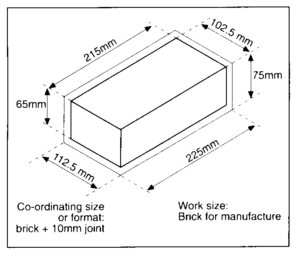
Bricks are a regular size rectangular units. Bricks are made of clay. They are usually used for most of the building works. Bricks are most generally used as a substitute for stone when the stone is not available.         


Types of Bricks

Bricks can be of many types depending on –

     i. Quality

  ii. Building Process

 iii. Manufacturing Method

 iv. Raw Material

   v. Using Location 

 vi. Weather-resisting Capability

vii. Purpose of Using 

viii. Shape 

 ix. Region

VASTU TIPS FOR STAIRCASE

VASTU FOR STAIRCASE:-

Staircases – or stairs for short – are an important part of each and every multistory house.

Stairs allow you to move from one level of the home to another level – easily and fluently.

In Vastu Shastra, staircases are given very high importance; it is said, believed – and even validated – that a staircase which does not comply with the rules and regulations of Vastu shastra leads to frequent – in many cases, major – accidents, and loss of wealth and mental tension.

On the other hand, if stairs are located – and built – as per Vastu, then the residents enjoy wealthhealth and peace of mind.          

Staircase Vastu – Why Is It Important?

There have been many instances where a family – or an individual – faces severe money and health problems; when an accurate Vastu analysis of such houses was done; it was found that – in most of the cases – the staircase of the home was the root cause of all the issues as the staircase was not complying with Vastu rules and guidelines.

To make you understand the risks associated with Vastu’s non-compliant stairs, I have compiled a list of problems caused due to this DEFECT.

Yes, “DEFECT”, understand that in Vastu shastra, noncompliance of stairs with Vastu rules and guidelines is a major – an obviously – a very serious defect.

Vastu Non-Compliant Stairs – List of Problems, Issues and Risks

Financial Troubles: Loss of wealth, debt and bankruptcy

Health-Related Issues: Frequent accidents – lethal and minor, ill-health of children in a family, breathing problems; blood-related medical issues and rare lethal diseases.

Family IssuesConflict within family members, mental tension and stress.

Being a sensible and responsible person, I believe that you will never – in any case whatsoever – want yourself or your family to face such harsh situations. Don’t you?

I believe that the above mentioned – a few – reasons are sufficient for you to consider doing Vastu for stairs in your home.

Hence read the next section of this article to understand – clearly – and implement staircase Vastu tips so that the stairs in your home bring happiness and well-being to you and your family.

Staircase Vastu – How You Can Do It?

This section of the article is dedicated to all those who want to do Vastu for stairs in their home.

In this section of the article, I reveal to you, the best location of the staircase in a home, the shapeauspicious colours for the staircase and much more so that you can make the staircase in your home as per Vastu shastra.

To begin with, I want you to take a look at the image – which I have created – for you.

The below image will reveal to you – in a nutshell – the best locations to build a staircase in your home as per Vastu shastra.

Seen the image? Ok, let’s continue.

Now you know that the best location to build a stair in a home is the South-West corner.

However – due to any reason – if the South-West corner of the home is unavailable to make a staircase, then the next best place to locate stairs is the South or West portion of home.

The next step in making the staircase of your home a Vastu compliant one is to implement Vastu tips for staircase.

I have compiled a list of all Vastu tips and guidelines which will help you achieve a vastu compliant staircase in your home.

Read – and understand them completely.

Staircase Vastu Tips

What You Must DO

  1. As per Vastu Construct a staircase in the South-West corner or West or South directions in a home.
  2. As per Vastu You can construct an external staircase in South-East facing East, South-West facing West, North-West facing North and South-West facing South.
  3. As per Vastu Staircase suggests that while going up via stairs, one must climb towards the West or South; and while descending one should descend towards East or North. Provide a turn in any direction due to the paucity of the land.
  4. As per Vastu Keep the stairs clockwise as far as possible.
  5. As per Vastu Use the area under a stair as a store place.
  6. As per Vastu Provide a roof sloping towards East or North at the top of the staircase.
  7. As per Vastu Keep the number of steps odd. Make sure that the number of risers when divided by 3 leaves 2 as the remainder. E.g. 5, 11, 17 etc.
  8. As per Vastu Use light and soothing colours for a Staircase. Avoid red and black colour for stairs.
  9. As per Vastu Repair broken stairs immediately else it may cause accident and conflict in family due to mental tension.

What You Must AVOID

  1. As per Vastu The staircase must never be on the North-East side of the home.
  2. As per Vastu If the staircase is in the North-East of the home then there will be financial and business losses; also the head of the family will be in debt.
  3. As per Vastu Avoid stairs in the centre of a home. Keep the centre of the home free as this is the Brahmasthan. 
  4. As per Vastu Spiral stairs are not recommended as per Vastu as they cause bad health.
  5. As per Vastu If a staircase if encircling the building then it will lead to calamities.
  6. As per Vastu One must never keep an almirah or cash locker under a staircase.
  7. As per Vastu The first step of any stair should never be round or circular.
  8. As per Vastu Stairs in a home should never start or end from/in Kitchen, Pooja/Prayer Room, Store Room or Strong Room.
  9. As per Vastu Do not have Pooja Room, toilet or Cash/Strong room under any staircase.
  10. As per Vastu If the space is less and the staircase is constructed South-East or North-West then it may, to some, extent affect the health of children in the family.
  11. As per Vastu Avoid circular or round steps as far as possible.
  12. As per Vastu If a staircase is built in the South-West (the best place) of a home, and room is available at the end of the stairs, then no one should occupy the room. If someone does occupy the room then he will fall sick, and have breathing problems; blood circulation will become slow and will start suffering from rare diseases.
  13. As per Vastu The steps going to upper floor must never be the same stairs that go to the basement or cellar.

Since now, you have all the required information on staircase vastu, I hope and believe that you will now be able to make the staircase in your home a vastu compliant one.